


Cities We Serve
Austin Area:
San Antonio Area:
Not seeing your area? Give us a call at (833) 656-4056


Installation & Replacement
A house built for a family in 1975 had a couple of circuits per room and a kitchen with a range and a refrigerator. Today the same house wants an induction cooktop, a second oven, a workshop in the garage, a hot tub on the patio, a home office with three monitors and a backyard casita for a parent or a renter. Each of those is an installation job: a new circuit from the panel, sized and protected correctly, run cleanly and permitted when the work calls for it.
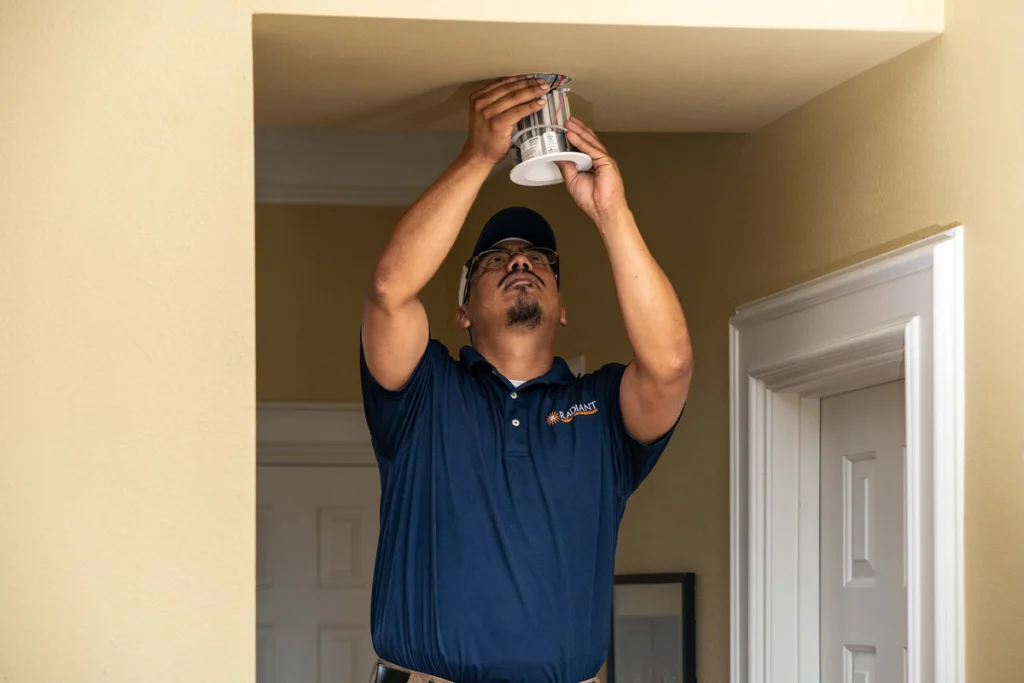
Radiant’s licensed electricians do that work across Austin and the surrounding cities. Dedicated circuits for the appliances that deserve one. Sub-panels for detached garages, ADUs and shops. Whole-home surge protection at the panel, which matters here where spring thunderstorms and post-outage surges take out electronics every year. Wiring for kitchen and bath remodels, including the extra circuits modern kitchens require. Smoke and carbon monoxide alarms, bathroom exhaust fans, attic fans, landscape lighting transformers and the disconnects and circuits a new air conditioner or electric tankless water heater needs.
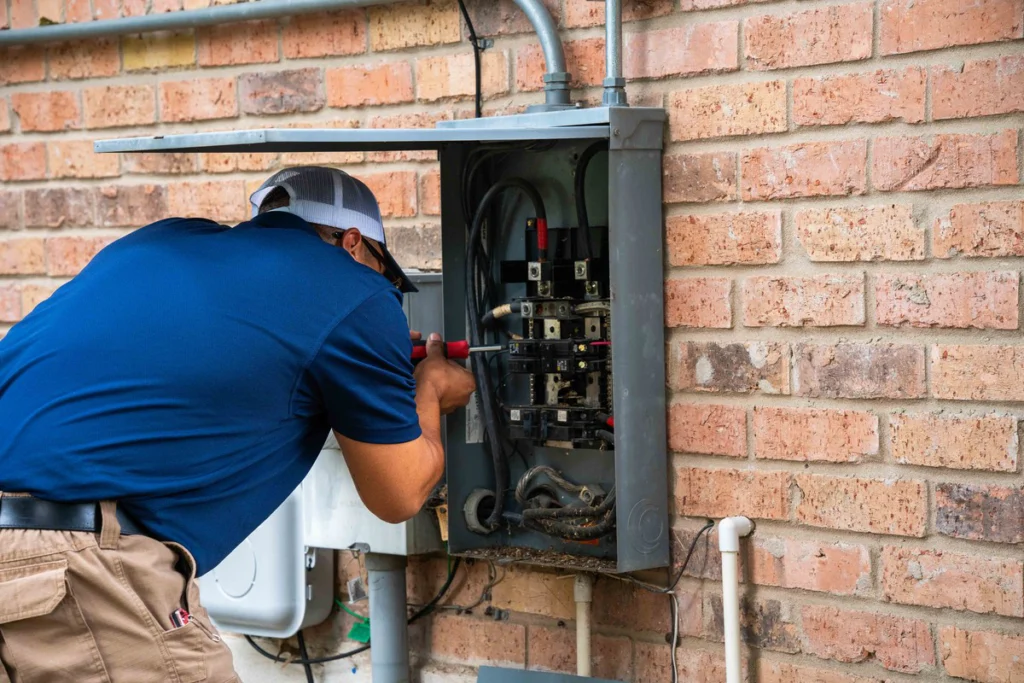
Before any of it, the electrician checks whether the panel has the capacity and the slots. If it does not, you hear that in the quote along with the options, not after the drywall is open. Every installation is priced in writing first, backed by the Home Comfort Guarantee, and eligible for financing when the project is a big one. For chargers and generators, see the dedicated EV charger and generator pages.
Common Projects
These come up every week. Most of them need their own circuit, and a few need a bigger panel.
Induction cooktops, wall ovens, a big microwave and countertop circuits. Modern kitchens need far more circuits than the old one had.
ADUs are everywhere in Austin now. A sub-panel fed from the main, with its own circuits for a mini-split, a kitchen and a bath.
Large 240-volt loads outdoors with strict GFCI and disconnect requirements. Not a place for improvising.
Table saws, compressors and a welder trip a shared garage circuit instantly. Dedicated 120 and 240-volt circuits fix it.
Lost a TV, a router and the garage door opener to one strike. A panel-mounted surge protector is cheap next to that list.
A properly sized breaker, a disconnect at the unit and sometimes a new circuit. We do it as part of the HVAC install.
What We Install
From a single new circuit to the wiring for a whole addition.
How It Works
Plan it once, price it once, build it once.
What you are adding, where it goes and when you need it. The electrician looks at the panel and the route while you talk.
Load calculation, breaker and wire sizing, GFCI and AFCI requirements, and whether a sub-panel or upgrade is part of it.
Everything in one number, including the permit and any patching, honored for 72 hours.
Circuits run, devices set, breakers labeled, inspection passed and the site cleaned up before we leave.
Save on the work your home needs most.
A licensed electrician will size it, permit it and price it in writing before any work starts.
Don't just take our word for it — hear from our satisfied customers
Maintenance Membership
Home maintenance for $9.99 a month.
Care Club members get two HVAC tune-ups and a plumbing safety inspection every year, priority scheduling, no dispatch fees — ever — and 5% off every repair.
Yes, and those two are good examples of why a dedicated circuit matters. An induction range draws heavily and briefly, and it needs a 240-volt circuit sized to its nameplate, not the old range circuit that happens to be there. A hot tub is a large outdoor load with specific requirements for ground-fault protection and a disconnect within sight of the tub. Both are permitted work. We size the conductor and breaker to the equipment and the length of the run, install the disconnect where it is required, and make sure the panel has the capacity to carry the new load alongside the air conditioner in August.
Yes. Accessory dwelling units are common across Austin now, and they are almost always fed by a sub-panel in the new structure, supplied by a feeder from the main panel. The sub-panel gets its own grounding and carries the circuits for the unit: a mini-split, kitchen counters and appliances, a bath with GFCI protection, lighting and general outlets. The first question is whether the main panel can supply the feeder, and on a 100-amp service the answer is often no, so a panel upgrade becomes part of the project. We work with your builder or handle the electrical scope directly, and we pull the permit.
We think so. Spring and early summer thunderstorms bring lightning to the area every year, and the surges that come with grid switching and power restoration after outages are just as hard on electronics. A whole-home surge protective device mounts at the panel and clamps voltage spikes before they reach your circuits. It does not replace the power strip under your desk; it protects the things you cannot plug into one, like the air conditioner’s control board, the water heater’s electronics, the garage door opener and the built-in appliances. Compared to replacing a single control board, it is a modest one-time cost.
Yes. Bring the fan, the chandelier, the charger or the smart switch and we will install it, with one condition: it has to be safe and listed for the use. If a customer-supplied device is damaged, not rated for the location, or asks for a circuit the house cannot provide, we will say so and suggest an alternative rather than install something we would not put in our own homes. Warranty on the device itself stays with the manufacturer, and our workmanship is covered by the Home Comfort Guarantee.
When the work requires one, yes, and we schedule the inspection that follows. New circuits, sub-panels, panel changes and most equipment hookups are permitted work; swapping a like-for-like fixture or device generally is not. The permit is not paperwork for its own sake. It means an inspector confirms the work was done to code, which protects you now and again when you sell, because unpermitted electrical work is exactly what buyers’ inspectors look for. The permit cost is included in the written quote so there is nothing extra at the end.
