


Cities We Serve
Austin Area:
San Antonio Area:
Not seeing your area? Give us a call at (833) 656-4056


Sewer Camera Inspections
Nobody should dig up a yard, break a slab or price a sewer replacement on a hunch. A sewer camera inspection replaces the hunch with a picture. Our plumber feeds a waterproof camera head on a flexible push rod into the line, usually through the cleanout, and watches the inside of the pipe on a monitor as it travels toward the street. You watch too. The footage is recorded, and a transmitter in the camera head lets us stand in the yard with a locator and mark exactly where the problem is and how deep.
What the camera finds in Austin and San Antonio homes is fairly predictable. Roots growing through the joints of old clay pipe. Cast iron with the bottom rusted out. A joint pushed out of line by clay soil that swelled and shrank one too many times. A belly, where the line has settled into a low spot that holds water and sediment. Sometimes it is simpler: a wad of wipes, a toy, or grease that a cable pushed down and left. Each of those has a different fix and a very different price, and the camera is how you find out which one you have before you spend anything.
We run cameras after clearing a line that has backed up more than once, before jetting an older pipe, before quoting any repair or replacement, and after the work to prove it was done right. Buyers looking at an older home in either city should run one before closing. It is the cheapest sewer service we offer and it prevents the most expensive mistakes.
When to Look
Any of these is a reason to look before anyone quotes a fix.
A second backup within a year means something in the pipe is catching debris. The camera shows what, and whether clearing will keep working.
A home inspector does not look inside the sewer line. In the established neighborhoods of either city, that line may be the most expensive thing you cannot see.
Fixtures that share a problem share a pipe. The camera finds the section that is narrowing.
A leaking lateral waters the grass above it. The camera and locator put a mark exactly over the leak.
Before you agree to dig up the yard, see the footage. A single broken joint is a repair, not a replacement.
Hydro jetting a pipe that is already cracked or separated makes things worse. A quick look first is the safe order of operations.
What We Inspect
The camera goes wherever the pipe goes: under the yard, under the slab and out to the city tap.

How It Works
About an hour for most homes, and nothing gets dug up.
A backup, a purchase, a quote from someone else. That shapes what we look for and whether a clearing should come first.
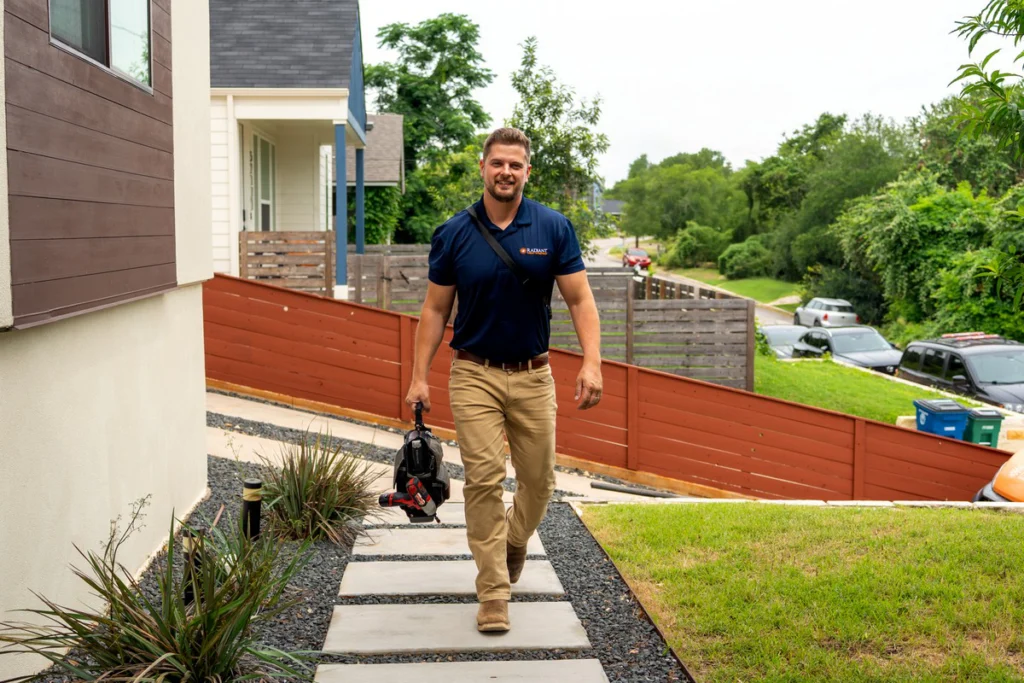
From the cleanout or another access point, the plumber pushes the camera through the line and narrates what you are both seeing.
Every root intrusion, break or belly is traced from the surface and marked with its depth.
The recording is yours. If a fix is needed, you get a written price for it, honored for 72 hours, with no obligation to decide on the spot.
Save on the work your home needs most.
A camera inspection is the cheapest way to avoid an expensive guess. Serving Austin and San Antonio.
Don't just take our word for it — hear from our satisfied customers
Maintenance Membership
Home maintenance for $9.99 a month.
Care Club members get two HVAC tune-ups and a plumbing safety inspection every year, priority scheduling, no dispatch fees — ever — and 5% off every repair.
If the house is more than a few decades old, yes. A general home inspection checks that the drains run on the day of the visit; it does not look inside the sewer lateral, and that lateral is often the original clay or cast iron in the established neighborhoods of both cities. Roots, a bottom rusted out of the pipe, or a joint pushed apart by our clay soil will not show up on the walkthrough, and a sewer replacement is one of the more expensive surprises a new owner can get. A camera inspection during the option period takes about an hour, gives you recorded footage, and either clears the line of concern or hands you something concrete to negotiate with. Pair it with a whole-home plumbing inspection if the water heater and supply lines are the same vintage.
Everything on the inside surface of the pipe, in color, with a light. In practice that means root intrusions and where they entered, cracks and holes, joints that have separated or offset, sections that have collapsed, bellies where standing water shows the line has sagged, grease and scale on the walls, and whatever object is sitting in the flow. It shows the pipe material and where it changes, which tells us how old each section is. A transmitter in the camera head lets us locate any of those from the surface and read the depth. What it cannot see is the outside of the pipe or the soil around it, so a leak that is pushing water out through a hairline crack is sometimes better found with leak detection equipment.
Yes, while it is happening and afterward. Our plumber narrates the run on the monitor so you can see what a root mass or an offset joint looks like and where the footage counter says it is, and you keep a copy of the recording. We think that is the whole point of the service. A sewer quote that comes with footage is one you can check, take to another plumber for a second opinion, or use with a seller or an insurer. A sewer quote without footage is a request to trust someone. If a company tells you your line needs replacing and cannot show you why, ask to see the camera.
It can find a drain problem under the slab, which is a different thing from a supply-line slab leak, and it helps to know which one you have. If the symptom is a drain that backs up, a sewer smell or a wet spot that correlates with running water down a fixture, the camera through the under-slab drain lines is the right tool and it will locate a broken or separated section to the foot. If the symptom is a water bill that jumped, a warm spot on the floor or the sound of running water when nothing is on, that is a pressurized supply line, and it is found with acoustic and pressure-testing leak detection instead. Both are common in Central Texas because expansive clay moves slabs, and we do both.
