


Cities We Serve
Austin Area:
San Antonio Area:
Not seeing your area? Give us a call at (833) 656-4056


Home Electrical Safety Inspection
Electrical problems are quiet right up until they are not. A loose connection in a panel heats a little more every summer as the air conditioner loads it. A junction box someone buried in the attic during a 1980s remodel sits there with a splice nobody has seen since. Aluminum branch wiring from the late 1960s expands and contracts at every outlet until one day a plate is warm. None of that shows up as a symptom you would notice, which is exactly why an inspection is worth the hour.
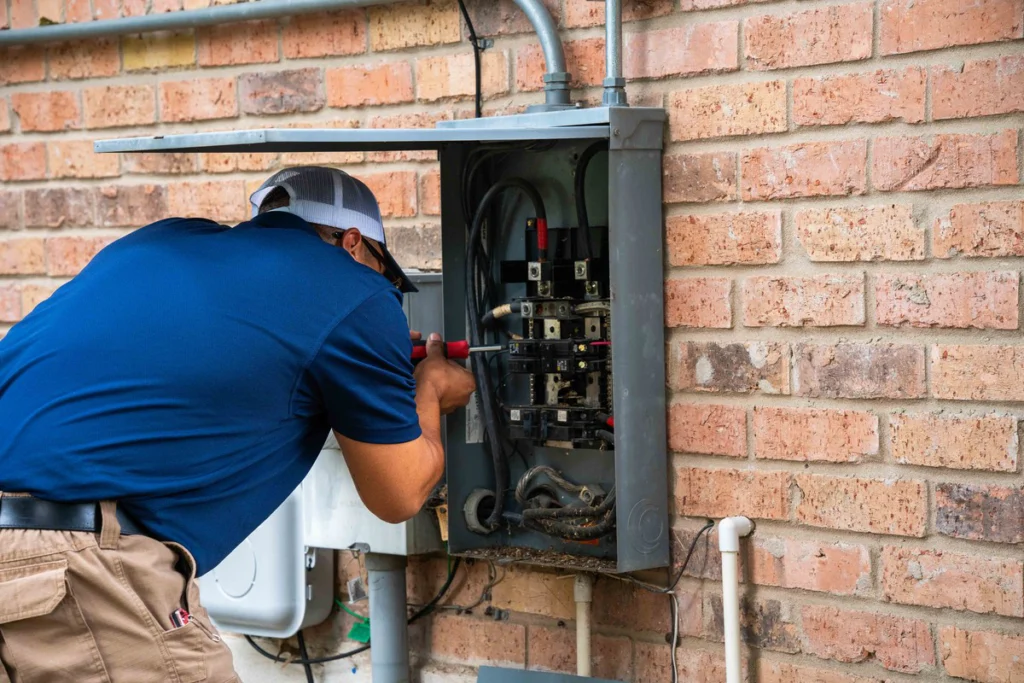
Radiant’s licensed electricians inspect the whole system, from the meter to the last outlet. We open the panel and look for heat, corrosion, double-tapped breakers, undersized wire on oversized breakers and the panel brands with a known failure record. We test GFCI and AFCI protection, check grounding and bonding, look at the service mast and weatherhead, sample outlets for polarity and ground, and go into the attic for open boxes, damaged insulation and the wiring that remodels leave behind. Then we write it down in plain language: what is fine, what should be fixed eventually, and what should be fixed now.
People call us for an inspection when they are buying a house in Austin and the general inspector flagged something, before a remodel adds load to an old system, after a lightning strike or a flooded garage, when an insurer asks about the panel, or because the house is sixty years old and nobody has ever looked. Whatever the reason, you get findings and a written price for any repairs, honored for 72 hours, with no obligation. If the system is sound, we are glad to say so. Related work lives on our panel and repair pages, and Care Club members pay no dispatch fees on any visit.
Good Reasons
Not every house needs one every year. These are the moments when one earns its cost many times over.
A general home inspector notes what is visible. A licensed electrician opens the panel and tells you what the repairs will cost before you close.
A new kitchen, a casita or a home office adds load. Find out now whether the panel and the circuits can take it.
Surges and water damage hide in panels and junction boxes. A check after the event is cheaper than the failure later.
Some carriers want to know the panel type, wiring type and age on older homes. A licensed report answers them.
Central Austin, Georgetown’s older streets, Taylor and Elgin have plenty of these. Original wiring, several owners of DIY.
A flicker here, a warm plate there, a breaker that trips once a month. Individually minor. Together, a reason to look.
What We Check
The same checklist on every house, adjusted for what the house turns out to be.

How It Works
About an hour for a typical home. Longer for a big house or an interesting one.
A purchase, a remodel, a worry or just due diligence. It helps the electrician know where to look hardest.
The electrician works through the checklist, testing as they go, and shows you anything worth seeing in person.
What is safe, what should be scheduled and what should not wait, with a written price on any repair.
Fix it today, fix it next month, or keep the report for your records. The quote is honored for 72 hours.
Save on the work your home needs most.
A licensed electrician will look at the whole system and tell you exactly what they found.
Don't just take our word for it — hear from our satisfied customers
Maintenance Membership
Home maintenance for $9.99 a month.
Care Club members get two HVAC tune-ups and a plumbing safety inspection every year, priority scheduling, no dispatch fees — ever — and 5% off every repair.
The panel with the cover off, looking for heat, corrosion, double-tapped breakers, wire sized wrong for its breaker, and brands with a poor safety record. The service mast, weatherhead and meter base. Grounding electrodes and bonding to water and gas lines. Every GFCI and AFCI device, trip-tested. Smoke and carbon monoxide alarms. A sample of outlets and switches for polarity, ground and worn contacts. The attic for open junction boxes, damaged cable, aluminum wiring and splices that should be in a box. The whole visit is written up with photos where useful, sorted by urgency.
On an older home, yes. A general home inspector will note the panel brand and any obvious problems, but most will not open the panel or test every device, and they are not pricing repairs. A licensed electrician can tell you whether that 1970s panel is a replace-it-now item, whether the aluminum wiring has been remediated, and roughly what it costs to fix what they find. That number belongs in your negotiation, not in your first month of ownership. On a newer build in Leander, Manor or Kyle the case is weaker, though we still find open boxes and missing bonds on new construction more often than you would expect.
There is no rule that fits every house. A reasonable guideline for a home more than 30 or 40 years old is every few years, and sooner if anything changes: a remodel, a new large appliance, a lightning event, or symptoms like flickering, warm plates or nuisance tripping. A newer home with a modern panel and no symptoms can go longer. What matters more than the calendar is that somebody licensed has actually looked inside the panel at some point, because that is where the problems that cause fires tend to live, and it is the one place homeowners never open.
Yes. Every inspection ends with written findings in plain language, including the panel brand and amperage, the wiring types present, the condition of grounding and safety devices, and any recommended repairs with a price. It is written so a non-electrician can read it, and it carries our license number. Insurers asking about panel type or aluminum wiring on an older home, buyers and sellers in a negotiation, and homeowners who simply want a record all use it. If you need a specific form filled out, bring it and we will do our best to complete it on site.
Double-tapped breakers and missing grounding are at the top, in homes of every age. In older central neighborhoods we see aluminum branch wiring from the late 1960s and early 1970s, panel brands with a known failure record, two-prong outlets with no ground, and open junction boxes in attics from decades of remodels. In newer suburbs the finds are usually installation shortcuts: unbonded gas lines, GFCIs that do not trip, and outdoor boxes that have taken on water. Almost none of it is an emergency on the day we find it. Most of it becomes one eventually if nobody looks.
