


Cities We Serve
Austin Area:
San Antonio Area:
Not seeing your area? Give us a call at (833) 656-4056


Panel Upgrades & Repair
The panel is the one part of your electrical system whose only job is safety. Each breaker is supposed to trip before the wire behind it overheats. When a panel is undersized, corroded, double-tapped or simply old enough that the breakers no longer trip reliably, that protection is gone and you usually do not find out until something is warm, buzzing or smoking.
Austin has a lot of these. Homes built through the 1970s in Crestview, Allandale, Tarrytown and the older parts of South Austin often still run on a 100-amp panel, sometimes a fuse box, that was plenty for a house with one window unit and a gas range. Now the same house has central air pulling hard through a 100-degree August, an electric dryer, a kitchen full of countertop appliances and maybe an EV in the driveway. The panel is full, the breakers are warm, and someone has already added a tandem breaker where it does not belong.
Radiant’s licensed electricians evaluate the actual load on the house, tell you honestly whether a repair, a sub-panel or a full 200-amp upgrade makes sense, and put the price in writing before any work starts. If you are adding an EV charger, a standby generator or a new heat pump, we size the panel for that at the same time. Financing is available, and the work is backed by the Home Comfort Guarantee.
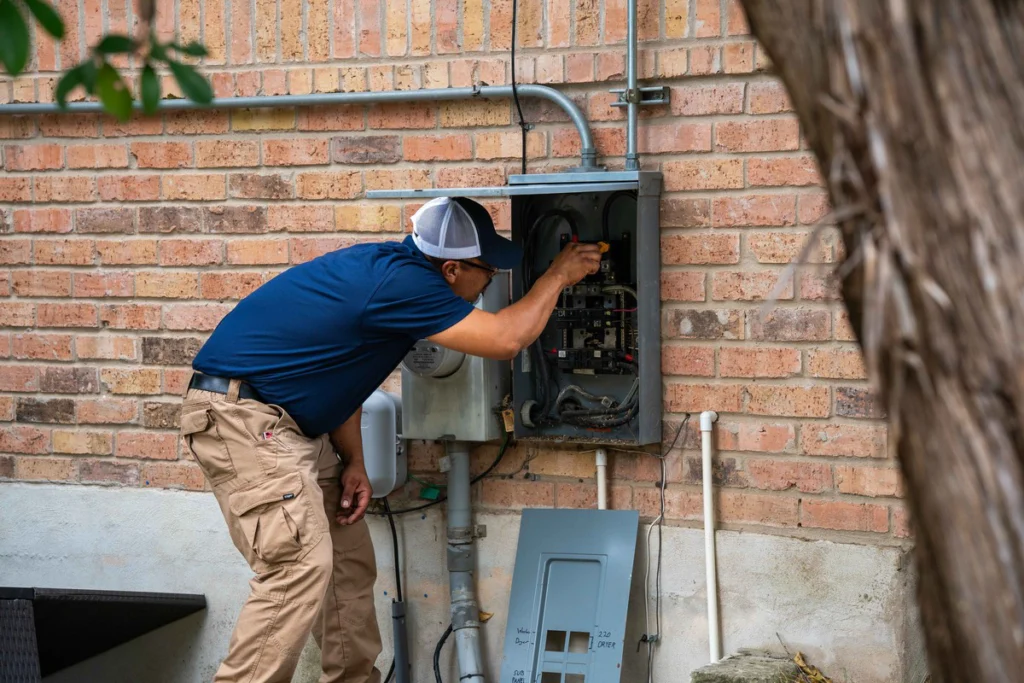
What to Watch For
A warm panel or a burning smell means call now. The rest mean call before you add the next big load.
A compressor drawing its starting current on a panel already near its limit. Common in older homes in July, and a sign the panel is at capacity.
Heat means resistance: a loose lug, a corroded bus bar or a breaker that is failing. This one is not a wait-and-see.
Arcing inside the panel. Shut off what you safely can and call. Do not keep resetting a breaker that trips with a snap and a smell.
The dryer, the microwave or the AC pulls the voltage down for the whole house. Usually a capacity problem, occasionally a bad neutral.
You want an EV charger, a hot tub or a workshop and there is nowhere to put the breaker. A sub-panel or an upgrade solves it properly.
Screw-in fuses and a few 1960s to 1980s panel brands with a documented history of breakers that fail to trip should be replaced, not repaired.
What We Do
The panel, the service entrance, the grounding and the breakers, done by one licensed crew.
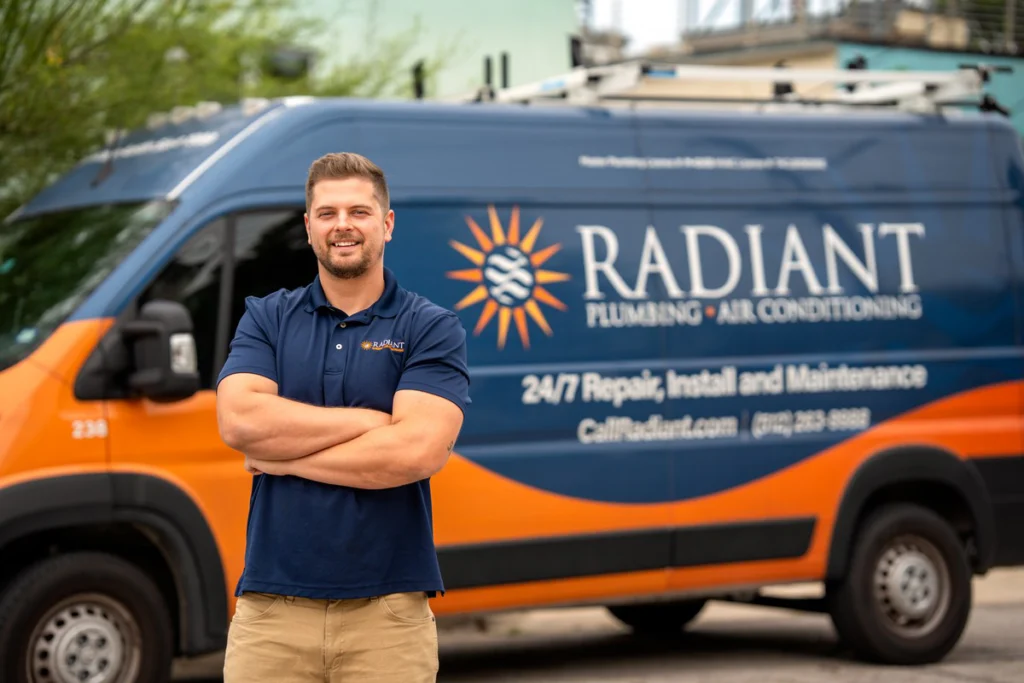
How It Works
Most of the day is careful, methodical work. The part you notice is a few hours without power.
The electrician opens the panel, checks for heat, corrosion and double-taps, and runs a load calculation for the house and anything you plan to add.
Repair, sub-panel or full upgrade, each with a price. The quote is honored for 72 hours, so you can decide without anyone hovering.
We pull the permit and coordinate the utility disconnect. You will know the date and roughly how long the power will be off.
New panel, breakers, grounding and labeling, then the inspection. For a typical residential upgrade, power can be restored before the end of the day.
Save on the work your home needs most.
A licensed electrician can evaluate it and give you a written price with no pressure to upgrade.
Don't just take our word for it — hear from our satisfied customers
Maintenance Membership
Home maintenance for $9.99 a month.
Care Club members get two HVAC tune-ups and a plumbing safety inspection every year, priority scheduling, no dispatch fees — ever — and 5% off every repair.
Age alone is not the reason; condition and capacity are. Replace the panel if it uses screw-in fuses, if it is one of the older brands known for breakers that do not trip, if there is rust or scorching inside, or if the cover is warm to the touch. Replace or add to it if there are no open slots and you need circuits, or if the breakers trip regularly when the air conditioner, dryer or oven runs. If the panel is 30 or 40 years old but clean, cool and adequate for your load, we will tell you to leave it alone. An inspection settles it in an hour.
Sometimes. A small home with gas heat, a gas water heater and a gas range can live on 100 amps. The trouble starts when the big electric loads stack up: central air, an electric range, an electric dryer, an electric water heater, a hot tub or an EV charger. Any two or three of those on 100 amps and you are at the limit on a hot afternoon. The honest way to answer is a load calculation, which adds up the house’s actual demand. We run one on every panel call. If the number says 100 is fine, that is what we tell you.
Yes. The utility disconnects service at the meter, the old panel comes out, the new one goes in with new breakers, grounding and labeling, and then service is reconnected and the work is inspected. For a typical Austin home, plan on most of a working day without power; the lights can be back on the same evening. We tell you the date ahead of time so you can plan around the refrigerator and, in summer, the air conditioner. Larger homes or jobs that also involve the mast, meter base or a sub-panel can take longer, and we say so in the quote.
Yes, and it is some of the most worthwhile work we do. Fuse boxes are not dangerous by design, but they are almost always undersized for a modern home and it is too easy to over-fuse a circuit. A few panel brands from the 1960s through the 1980s have a documented record of breakers that fail to trip under a fault, which defeats the entire purpose of the panel. If you are not sure what you have, send us a photo of the label or ask the electrician during a visit. We will tell you plainly if it should stay or go.
Yes. Radiant offers financing through Service Finance Company, LLC, subject to credit approval, including a no-interest, no-payments-for-6-months option. A 200-amp upgrade is a real investment, and it is often the thing standing between you and an EV charger, a generator or a heat pump you actually want. The electrician can run the monthly number on the written quote you already have, so you are comparing a payment against the cost of doing nothing.
