


Cities We Serve
Austin Area:
San Antonio Area:
Not seeing your area? Give us a call at (833) 656-4056


Generator Installation
February 2021 settled the question for a lot of Central Texas homeowners. Days without power in freezing weather meant burst pipes, spoiled food, no heat and, for anyone on medical equipment or with a newborn in the house, real danger. Summer outages are shorter but not gentler: a house with no air conditioning in August climbs past 90 degrees inside within hours. A standby generator turns those events into a few seconds of dark and then normal life.
A standby unit sits outside on a pad like an AC condenser, runs on natural gas or propane, and is tied into your panel through an automatic transfer switch. When utility power drops, the transfer switch disconnects the house from the grid, the generator starts itself, and power is back in seconds. When the grid returns, it hands control back and shuts down. Nobody has to go outside, pull a cord or run an extension lead through a window.
Radiant installs Generac standby generators for homes across Austin and the surrounding cities. Our licensed electricians size the unit to the loads you want covered, whether that is the essentials or the whole house including the AC, handle the transfer switch and panel work, coordinate the fuel connection and permitting, and run a full start-up test with you watching. Because Radiant also does gas line work, the fuel side and the electrical side can be handled by one company. Financing is available, and the work is backed by the Home Comfort Guarantee. If your panel needs an upgrade to accept the transfer switch, we tell you in the quote, not on install day.
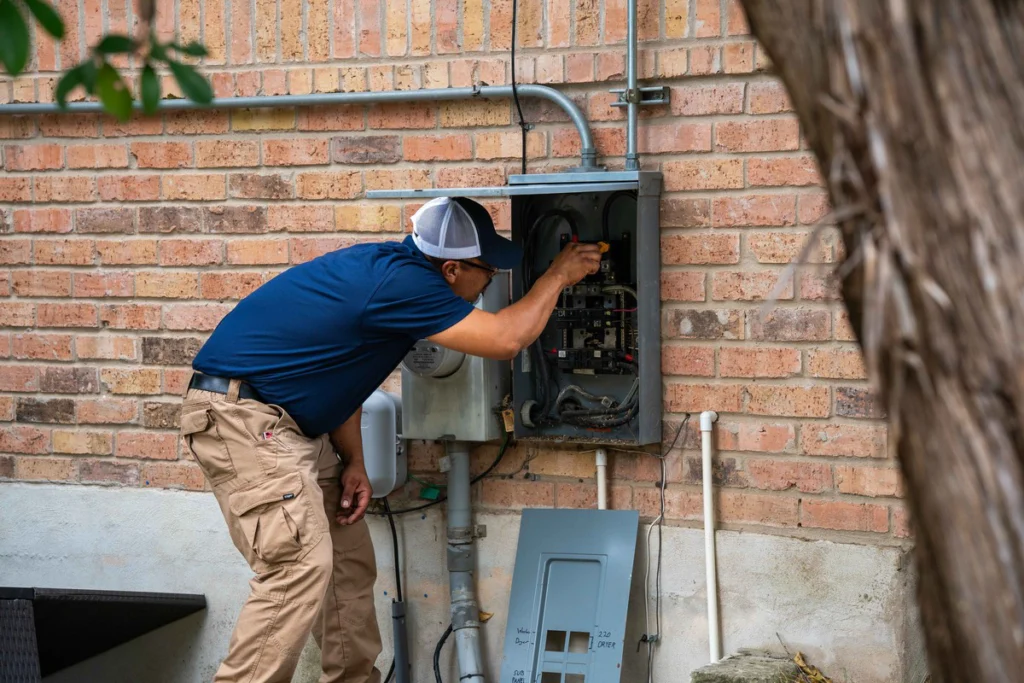
Is It Time?
Usually one of these, and usually right after the last outage.
Multi-day outages in a hard freeze. Heat, a refrigerator and a few lights would have changed that week entirely.
Oxygen, CPAP, refrigerated medication or a home dialysis setup. An outage is not an inconvenience; it is a clock.
Internet, computers and a cool office. A few hours of dark costs more than it used to.
A house without AC in a Central Texas summer gets unsafe quickly for the very young and the very old.
Outlying areas around Spicewood, Driftwood, Coupland or Elgin can wait longer for crews after a storm than downtown does.
Gas cans, extension cords through a cracked window and a carbon monoxide risk every time. A standby unit ends that routine.
What We Do
From sizing to start-up, and the annual service that keeps the unit ready.
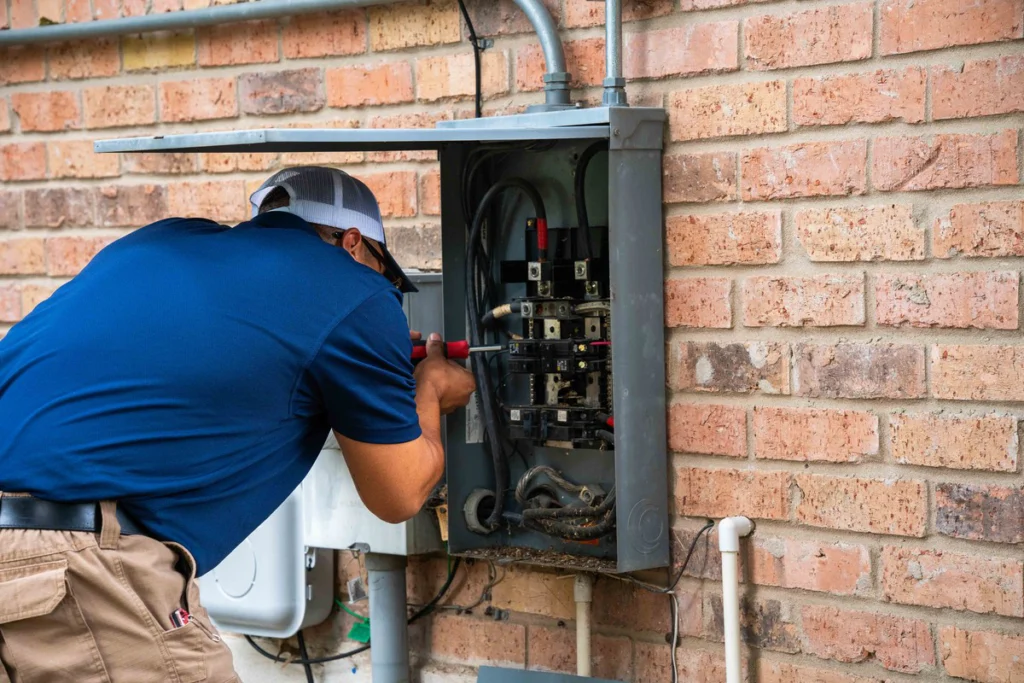
How It Works
A generator is a project, not a service call. Here is the order things happen in.
The electrician walks the house, checks the panel and the gas meter, and builds the list of what you want covered.
Two or three configurations with the unit, the transfer switch, the gas work and permitting in one number each. Honored for 72 hours.
The generator is set, the transfer switch and panel work are done, the gas line is run and pressure-tested, and the job is inspected.
We simulate an outage with you there, confirm the transfer, and show you the controls and the weekly self-test.
Save on the work your home needs most.
A licensed electrician can size it, price it in writing and explain the financing, with no pressure.
Don't just take our word for it — hear from our satisfied customers
Maintenance Membership
Home maintenance for $9.99 a month.
Care Club members get two HVAC tune-ups and a plumbing safety inspection every year, priority scheduling, no dispatch fees — ever — and 5% off every repair.
It depends entirely on what you want running. A refrigerator, some lights, the internet, a gas furnace blower and a few outlets is a modest load. Add central air conditioning and the number jumps, because the AC compressor is usually the largest single load in a Central Texas home and it needs extra capacity just to start. A well pump, an electric water heater or an electric range each add more. We build the list with you, add up the running and starting loads, and recommend a size. Managed-load transfer switches can let a mid-size unit carry the AC by holding off other loads while the compressor starts.
Either. If your home has natural gas service, that is the simplest choice: the fuel supply is effectively unlimited, there is no tank to fill and the unit can run for days. Homes outside gas service areas, which includes plenty of properties around Dripping Springs, Spicewood and the eastern edge of the county, use a propane tank. Propane works just as well; you simply need a tank sized for the run time you want and a plan to keep it filled. In both cases the gas meter or regulator has to deliver enough volume for the generator plus everything else in the house, which we check before quoting.
The automatic transfer switch watches utility voltage constantly. When power fails or drops outside a safe range, it signals the generator to start, waits a few seconds for the engine to stabilize, then switches the house over. You may notice the lights blink once. When utility power has been back and steady for a set period, it transfers the house back and lets the generator cool down and shut off. The unit also runs a brief self-test on a weekly schedule so you know it is ready. None of this needs you to be home, awake or even in town.
A portable is cheaper and fine for occasional use, but it comes with real limits. Someone has to be home to roll it out, fuel it and start it. Gasoline has to be stored and kept fresh. Cords run through doors or windows. And every year people are hurt by running one too close to the house, because the exhaust carries carbon monoxide. A portable should never be connected to house wiring without a proper transfer switch or interlock, which we can install. A standby unit costs more up front and does all of it automatically, safely and without you. For a household that cannot afford to be without power, that difference is the whole point.
Less than a car, but not none. A standby generator wants an annual service: oil and filter change, air filter, spark plugs on schedule, a battery check, and a run under load to confirm it actually carries the house. Between services, the weekly self-test exercises the engine and the controller, and you should keep the area around the unit clear of leaves and debris. The battery is the most common reason a generator fails to start when it is needed, so we test it every visit. Radiant can put your unit on a maintenance schedule so you are not the one remembering.
