


Cities We Serve
Austin Area:
San Antonio Area:
Not seeing your area? Give us a call at (833) 656-4056


Home EV Charger Installation
Plugging an electric car into a regular wall outlet overnight adds a few miles of range per hour. That is Level 1, and for most Austin commutes it is not enough. A Level 2 charger runs on 240 volts, like a dryer or a range, and typically refills a car overnight from nearly empty. Getting one into your garage means a dedicated circuit, usually 40 to 60 amps, from the panel to the charger location, with a breaker sized for it and, in many cases, a hardwired connection rather than a plug.
That is where the real questions live. Does the panel have the capacity? Older homes in central Austin on 100-amp service often do not, especially with central air already on the panel. Is there a slot for the breaker? How far is the garage from the panel, and does the run go through the attic, along an exterior wall or under a slab? Should the charger be inside, or on the driveway under a weatherproof enclosure because the garage is full of everything except a car?
Radiant’s licensed electricians answer all of that on the first visit and put the whole job in one written quote: circuit, breaker, charger mounting, permitting and, if needed, a panel upgrade or load-management device that avoids one. We install the charger you have chosen or help you pick one that matches your car and your panel. Financing is available and the work carries the Home Comfort Guarantee. Service is offered in Austin and the surrounding Austin-area cities.
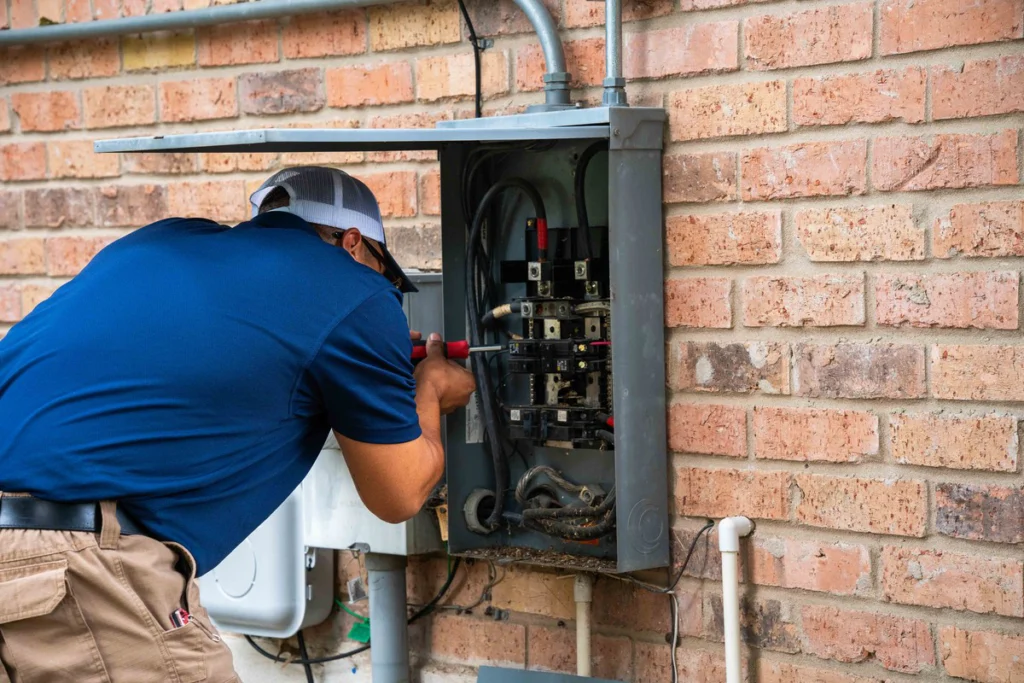
Sound Familiar?
Most calls come a few weeks after the car does.
Level 1 charging adds a few miles an hour. After a long day on MoPac, the car is not full by morning.
Waiting in a parking lot for a charger to free up is not why anyone bought an electric car.
Plenty of homes in Leander, Kyle and Hutto came with a 200-amp panel and an empty garage wall. The run is usually straightforward.
No breaker slot and 100-amp service. There are options, from a sub-panel to load management, and we price them honestly.
Two chargers, or one that shares a circuit between cars. Either way, the panel load calculation decides what is safe.
Shared circuits, undersized wire and outlets not rated for continuous load get hot. If yours was a shortcut, have it checked.
What We Do
Everything from the breaker to the connector, for garages, carports and driveways.
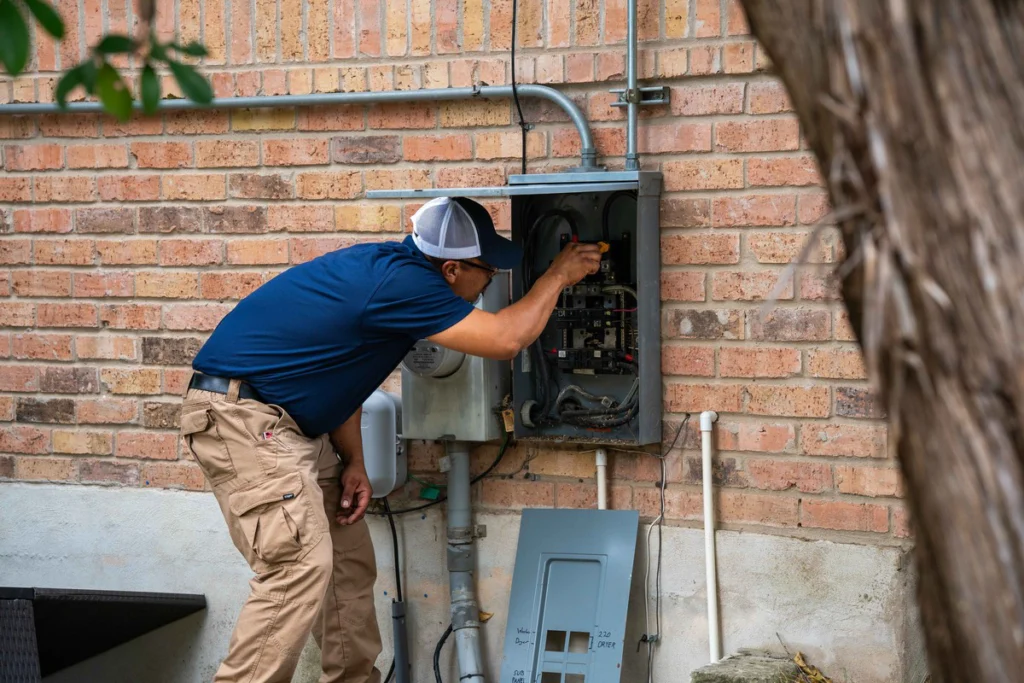
How It Works
One visit to plan, one to install, for a typical home.
The electrician runs a load calculation, looks for a breaker slot and walks the path from the panel to where the car parks.
Circuit, breaker, charger mounting, permit and any panel work in one quote you can sit on for 72 hours.
Conduit or cable from the panel, the breaker installed, the charger mounted and connected. Permitted work gets inspected.
We plug in, confirm the charge rate and walk you through the app or the controls before we leave.
Save on the work your home needs most.
Get the charger installed on a circuit built for it, with the price agreed before any work starts.
Don't just take our word for it — hear from our satisfied customers
Maintenance Membership
Home maintenance for $9.99 a month.
Care Club members get two HVAC tune-ups and a plumbing safety inspection every year, priority scheduling, no dispatch fees — ever — and 5% off every repair.
Level 1 is the cable that came with the car plugged into an ordinary 120-volt outlet. It is slow, generally a few miles of range per hour, and fine for a short daily commute or a plug-in hybrid. Level 2 uses a 240-volt circuit like an electric dryer and delivers several times the power, so most cars go from low to full overnight. Nearly everyone who drives an EV as their main car ends up wanting Level 2. It requires a dedicated circuit from the panel, which is what we install. DC fast charging, the kind at highway stations, is not something that goes in a house.
Sometimes yes, sometimes no, and guessing is how circuits end up overloaded. A charger is a continuous load that can run for hours at 32, 40 or 48 amps, on top of the air conditioner, the water heater and whatever else is on. Most 200-amp panels in newer Austin-area homes handle it fine. A 100-amp panel in an older home with central air is often close to its limit already. We run a load calculation on the first visit. If the panel is short, the options are a load-management device that pauses charging at peak times, a lower-amperage charger, a sub-panel, or a panel upgrade, and we price whichever fits.
Yes. Many chargers are rated for outdoor mounting, and for homes where the garage is a workshop or a storage room, the driveway is the practical spot. The installation uses weather-rated equipment, conduit for the wiring run, and a mounting location that keeps the cable off the ground and away from where cars turn. If there is no wall near where you park, a post can be set. Outdoor installations take a little more planning around the route from the panel and the weather protection, and that is all reflected in the written quote.
Both work when done correctly. A plug-in charger on a properly rated 240-volt receptacle is convenient if you might take the charger with you or want to use the portable cable that came with the car. Hardwiring is cleaner, allows higher charging rates on many units, and avoids a receptacle carrying a continuous load for years, which is where we see heat damage on shortcut installs. Some manufacturers require hardwiring above a certain amperage, and outdoor installations usually lean that way. Tell us what you have in mind and we will recommend the one that fits.
For a typical home with panel capacity and a garage on the same side of the house, the installation can often be done in a few hours in a single visit. A long run through the attic or around the exterior, a driveway installation with a post, or a sub-panel adds time but usually still fits in a day. If a panel upgrade is part of the project, plan on a full day with the power off for part of it, and the charger circuit is built in while the panel is open. Permitted work is inspected afterward, which does not stop you from using the charger in the meantime once we have tested it.
