A backflow preventer keeps water flowing in one direction, so water from irrigation, hoses or equipment can never reverse into your home’s drinking water.
What Backflow Is and Why It Happens
Backflow is the undesirable reversal of water flow in your pipes. Normally, pressure from the city main pushes clean water into your home and out through your fixtures. If that pressure suddenly drops, as it can during a water main break, a nearby hydrant being opened or utility maintenance, water can be siphoned backward. A pump, boiler or other pressurized equipment can also push water the wrong way.
When that happens, anything the water touched on its way out can come back in: fertilizer and soil from a sprinkler head, chemicals from a hose left in a bucket, or liquids, gases and suspended solids from connected equipment. A backflow preventer acts as a barrier that lets water move forward and closes if it tries to reverse, safeguarding your drinking water from contamination.
Where Backflow Preventers Are Used Around the Home
- Irrigation systems: The most common residential backflow risk. Sprinkler heads sit in soil, fertilizer and pet waste, and the system is connected directly to your water supply.
- Hose bibs: Small vacuum breakers thread onto outdoor faucets so a submerged hose can’t siphon back into the house.
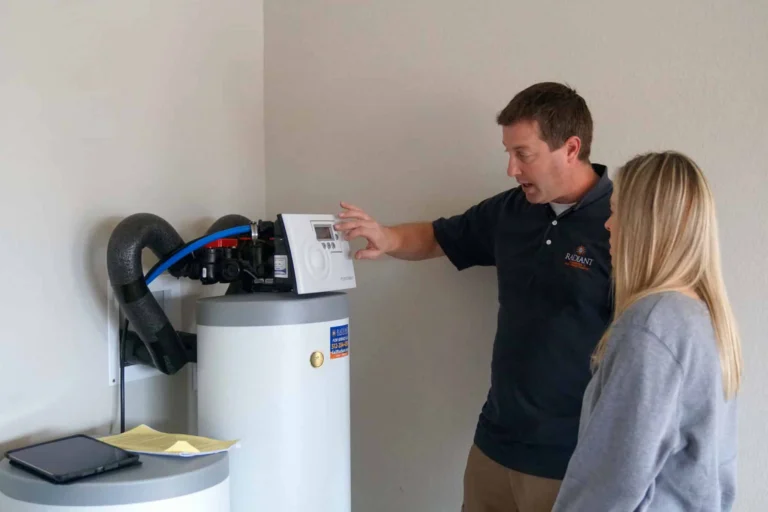
- Water treatment equipment: Softeners, filters and reverse osmosis systems drain to a sewer connection, which needs an air gap to keep wastewater separate.
- Pools, boilers and fire sprinklers: Any system that holds water under pressure or adds chemicals to it needs protection at the point where it connects to the supply.
Many local water utilities require a backflow assembly on irrigation systems and may require periodic testing by a licensed tester. Check your utility’s requirements, or ask us and we’ll walk you through them.
Types of Backflow Prevention Devices
Several devices serve this function, and the right one depends on the hazard level and how the water is used:
- Air gaps: A simple physical space between a supply outlet and the vessel below it, like the gap under a faucet spout.
- Pressure vacuum breakers: The above-ground assembly you often see near a home’s irrigation controller.
- Spill-resistant vacuum breakers: A variation designed for indoor use where discharge from the device would cause damage.
- Double-check valves: Two independent check valves in series, used for lower-hazard applications.
- Reduced pressure principle assemblies: The highest level of protection, used where a contaminant could pose a health risk.
Warning Signs and What You Can Check
Water that looks discolored or tastes odd after the sprinklers run, an irrigation assembly that spits or leaks constantly, and standing water around the device are all worth a call. In Central Texas, above-ground vacuum breakers are also a frequent casualty of hard freezes; wrapping yours before a cold snap can save a repair. Beyond insulating the device and keeping hoses out of buckets and pools, leave testing, repair and installation to a licensed plumber. These assemblies are precise and must be set up correctly to work.
Radiant works on all types of residential backflow prevention devices, from installing a new irrigation assembly to repairing a freeze-damaged one, with upfront pricing you approve before the work begins.
Protecting your family’s water is worth getting right. Call or schedule online with Radiant. Our licensed plumbers have served Austin and San Antonio since 1999, with 24/7 service and the Home Comfort Guarantee behind every job.