
For most Austin homes, the best air purifier for smoke is not a single box. It is a portable HEPA unit in the room where you sleep, paired with a better filter on your central heating and cooling system and the fan set to run while the air outside is bad. The portable unit cleans the room you are in right now; the HVAC filter cleans every room the ducts reach. Which half to invest in first depends on your house, and this guide walks through both.
Why Austin Air Turns Smoky
Austin is not wildfire country the way the West is, but smoke still finds us. Drought-year grass and brush fires in Central Texas, prescribed burns, and smoke carried on the wind from fires hundreds of miles away can all push a gray haze over the city for days at a time. Summer brings Saharan dust, and from December into February, cedar season loads the air with pollen that behaves a lot like smoke from a filter’s point of view.
What all of these have in common is fine particulate: particles small enough to stay suspended for hours and to reach deep into the lungs. That is the thing a purifier needs to catch. Smoke also carries gases and odor, which a particle filter does not touch; for that you need an activated carbon layer.
What MERV Means, and Why It Matters for Smoke
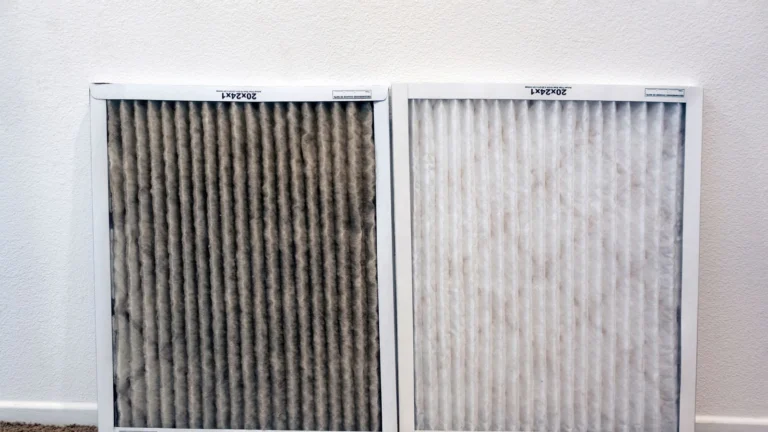
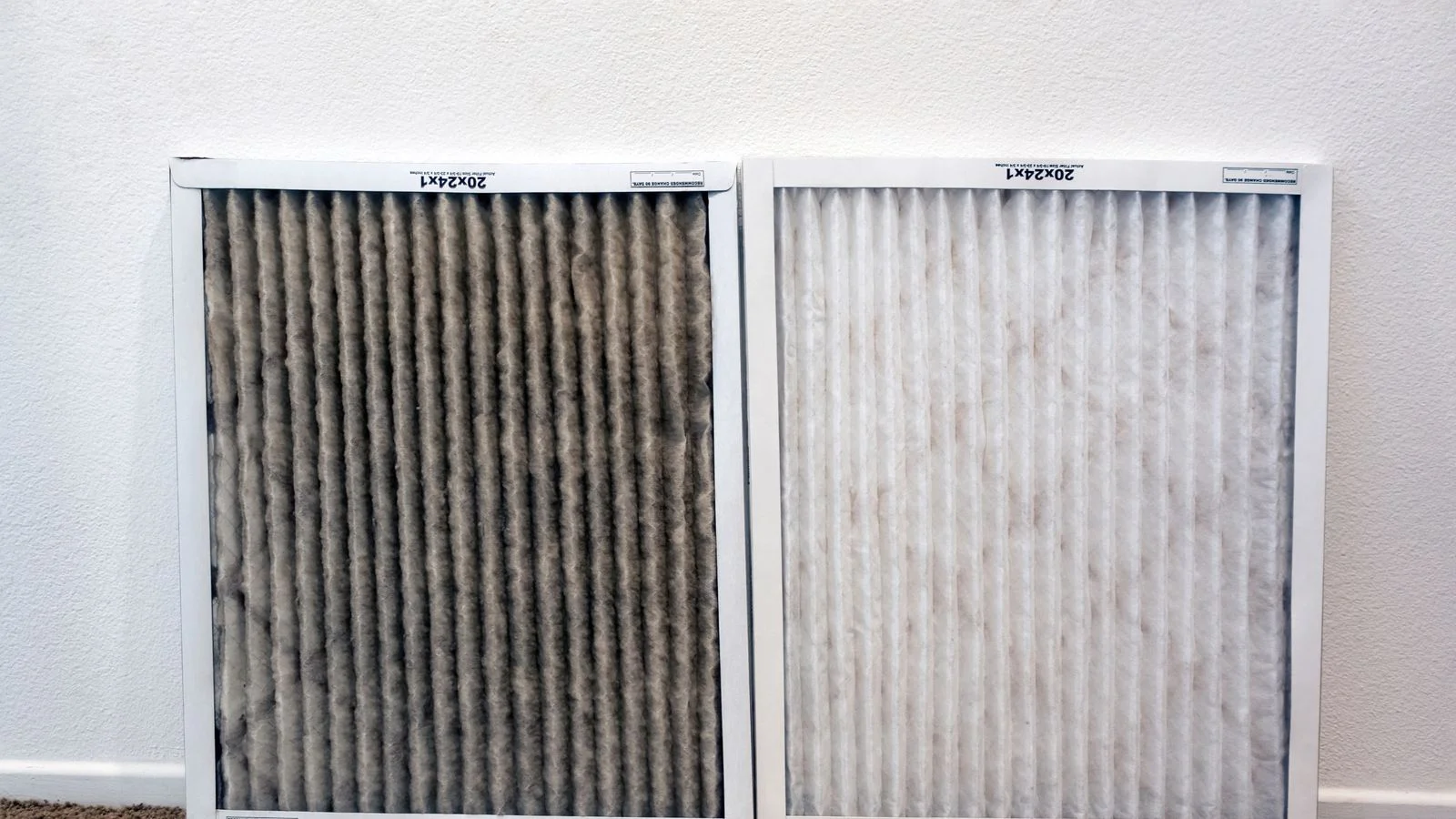
MERV is the rating scale for the pleated filters that go in a furnace or air handler. A higher number means the filter captures a greater share of smaller particles as air passes through it. The low-MERV fiberglass pad that came with many systems protects the equipment from dust and little else. Higher ratings capture pollen, then mold spores and dander, and at the top residential ratings a meaningful share of smoke particles.
There is a catch. Denser filter media resists airflow, and a blower that was set up for a thin fiberglass pad can struggle to pull air through a high-MERV filter in a standard one-inch slot. The result is weaker airflow, higher bills and sometimes a frozen coil in July. The way around that limit is more filter surface, which is what a media cabinet provides.
HEPA is a different standard, finer than any filter rated on the residential MERV scale. True HEPA filters are what portable purifiers use. Very few ducted home systems can pull air through a HEPA filter at the return, which is why whole-house filtration tops out at high MERV ratings rather than HEPA.
Portable HEPA Air Purifiers
A portable purifier is a fan pulling room air through a true HEPA filter, often with a carbon pre-filter for odors. During a smoke event it is the fastest way to make one room noticeably better, and the room that matters most is the bedroom, where you spend eight hours with the door closed.
- Strengths: true HEPA filtration, a carbon layer for the smell of smoke, no installation, works in a rental, and you can move it to wherever people are gathered.
- Limits: it cleans one room, and only while it runs. Filters are a recurring cost, and quieter settings move less air.
- Buying advice: match the manufacturer’s rated room size to your room and then go a size up, so the unit can run on a lower, quieter setting and still keep up. Look for a true HEPA filter, not HEPA-type, and a carbon stage if odor bothers you. Brand matters far less than those two specifications.
Whole-House Options Through Your HVAC System
Your air conditioner already pulls the whole house’s air through a filter many times a day, so improving that filter upgrades every room at once.
A higher-MERV one-inch filter
The cheapest step. Replace the fiberglass pad with a pleated filter one or two ratings higher and change it on schedule. The gain is real but capped by airflow; if your system runs louder or the registers feel weaker after the change, you have found that ceiling. A technician can measure the pressure drop across the filter and tell you how far your blower can go.
A media filter cabinet
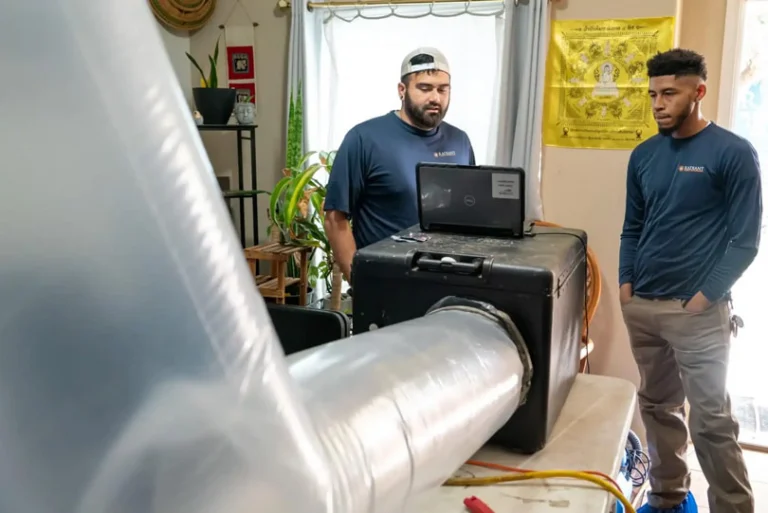
A media cabinet replaces the thin filter slot with a deep pleated cartridge several inches thick. The folded media has many times the surface area, so the filter can carry a high MERV rating without choking the blower, and it holds far more dust before it needs changing. This is our usual recommendation for a household that wants smoke and cedar protection in every room.
Whole-house air purifiers
Beyond filtration, several kinds of active purifier mount in the ductwork. Some use electronic charging to make particles clump and drop out on a collector plate or downstream filter. Others use UV light, which is aimed at the coil to keep it clean and does little for smoke on its own. For smoke and pollen, we favor approaches built around high-grade filtration, with carbon media where odor is the complaint, because the result is predictable and easy to maintain. Our whole-house purifiers page compares the approaches.
Seal the Ducts, Then Run the Fan
Two habits make any of the equipment above work better. The first is sealing the ducts. In a Central Texas attic that hits 130 degrees, tape and mastic on flex duct joints bake and let go, and a leaky return duct pulls unfiltered attic air straight into the system behind the filter. Sealing the returns closes that bypass so the air you breathe actually passed through the media.
The second is running the fan. On a smoky day in October or a cedar-heavy afternoon in January, the thermostat may not call for cooling or heating for hours, and if the blower is off, the filter is doing nothing. Set the fan to On or Circulate for the duration of the event and the house gets filtered continuously. Keep windows closed and check the filter afterward; a heavy smoke event can load a filter far faster than its normal schedule suggests.
So Which Is Best for Your Austin Home
- Renting, or one room matters most: a true HEPA portable unit with a carbon stage, sized up for the bedroom.
- Whole house, central system in place: a media filter cabinet, duct sealing, and the fan on during events.
- Allergies year-round plus smoke: both, since the portable unit covers the hours the HVAC fan is off and the room with the door closed.
If you are not sure what your blower can handle or where your ducts are leaking, that is a measurement, not a guess. Radiant’s licensed technicians have worked on Austin homes since 1999 and can test the system, recommend the filter grade it can carry, and seal the returns on the same visit. Pricing is approved upfront before any work starts, with no surprise fees, and every installation carries our Home Comfort Guarantee. Learn more about our indoor air quality services in Austin, or schedule a visit before the next haze rolls in.