
Yes. A water softener needs regular salt refills, periodic checks of the brine tank, valves, and regeneration settings, and occasional cleaning to keep working.
What Ongoing Care Looks Like
Most water softeners use salt to recharge a bed of resin beads that trap the calcium and magnesium in hard water. The system is low-maintenance compared to most appliances, but it is not no-maintenance. A softener can appear to be running normally, cycling on schedule and using power, while quietly delivering hard water because the salt ran out or a valve has worn. Routine checks are how you catch that before scale starts building up again.
Maintenance You Can Do Yourself
- Check the salt monthly: Lift the lid on the brine tank and keep it topped up according to the manufacturer’s guidance. Never let it run empty.
- Break up salt bridges: A hard crust can form across the tank with a hollow space underneath, so the salt level looks fine but no brine is being made. Gently break it apart with a broom handle. If the salt turns to mush at the bottom, scoop it out.
- Use the right salt: Stick with the type your system calls for and keep the lid closed to limit humidity.
- Test your water: Inexpensive hardness test strips used a few times a year tell you whether the softener is actually working. Spotting on dishes, scale on faucets, and stiff laundry are the everyday clues.
- Watch the regeneration: The system should regenerate on its programmed schedule, usually overnight. Listen for it, and check that the drain line is clear and not submerged.
- Exercise the bypass valve: Move it occasionally so it does not seize. You will need it if the softener ever leaks.
What a Professional Checks
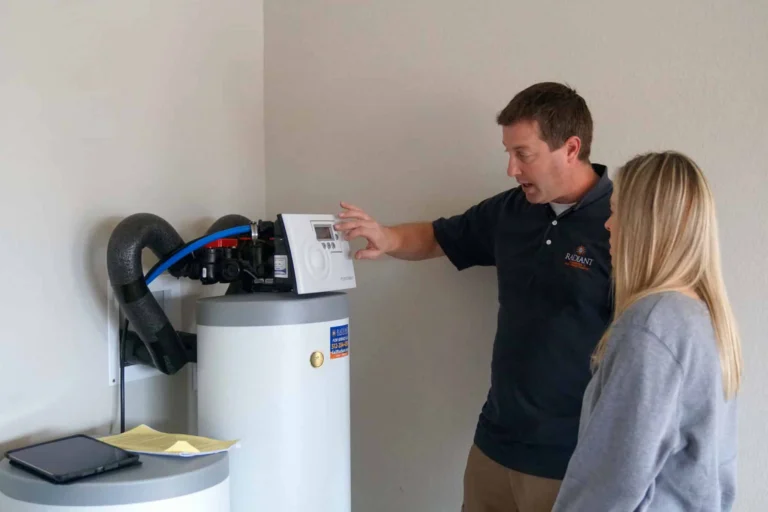
A periodic service visit covers the parts you cannot see. The technician confirms the hardness setting matches your actual water, inspects the control valve seals and pistons, cleans the injector and brine line, checks the resin bed for fouling or wear, cleans the brine tank, verifies the flow meter and timer, and replaces any pre-filter. Resin does wear out over time, especially in very hard water or where chlorine levels are high, and a professional can tell you whether a resin rebed or a new unit makes more sense.
Signs Your Softener Is Not Working
- White scale returning on fixtures, showerheads, and the dishwasher
- Dry skin, dull hair, and soap that will not lather
- Salt level that never seems to drop
- Water in the brine tank that is overflowing or sitting unusually high
- The system running or draining constantly
- A salty taste at the tap
Why It Matters in Central Texas
Austin and San Antonio water comes from limestone sources, the Edwards Aquifer and the Highland Lakes, and it is very hard. Without a working softener, scale shortens the life of water heaters, dishwashers, washing machines, and faucet cartridges and leaves spots on everything. A neglected softener stops protecting all of that while you are still buying salt for it.
Keep Your Softener Working With Radiant
Radiant has helped Austin and San Antonio homeowners maintain and repair water softener systems since 1999. Our licensed technicians are available 24/7, you approve upfront pricing before any work starts, and there are no surprise fees. Call or schedule a softener check-up with Radiant, backed by our Home Comfort Guarantee, and keep your plumbing and appliances protected year after year.