No Hot Water? Start Here.
Before assuming the worst, run through these basics. They’re quick, safe, and often resolve a hot water heater not working situation.
- Prioritise safety. If you smell gas, see sparks, or notice an active leak, stop and call a professional immediately.
- Confirm demand. If multiple showers, laundry, and the dishwasher just ran, the tank may simply need recovery time. Wait 30–60 minutes and test again.
- Verify the thermostat. Most homes are best set to 120–130°F. Settings that are too low can feel like no hot water in house, even when the unit is on. Avoid going above 140°F to reduce scald risk.
- Check multiple fixtures. If only one tap has no hot water, the issue may be a fixture mixing valve or aerator—not the water heater.
If these steps don’t restore heat, move to the targeted checks below based on your water heater type.
Quick Troubleshooting
Still have no hot water? Before you assume the worst, it helps to look at your water heater through the lens of its type: electric, gas, or tankless. Each one has its own common failure points, but most water heater not heating issues come back to power, ignition, thermostat settings, or mineral scale.
Use the guides below to check a few safe, easy items. These steps can help you understand what’s going on and whether it’s something you can address now or something a professional should handle.
Electric Water Heaters
Electric units rely on steady power and accurate temperature control. If an electric water heater is leaving you with no hot water:
- Breaker panel: Look for a tripped breaker marked “water heater.” Reset it once by turning fully off, then on. If it trips again, stop and schedule service.
- High‑limit reset: Many units have a red reset button behind the upper access panel. Turn power off at the breaker first, press the button once, replace the panel, and restore power. If it trips again, a component is likely failing.
- Thermostat settings: If water is warm but not hot, the thermostat may be mis-set or faulty.
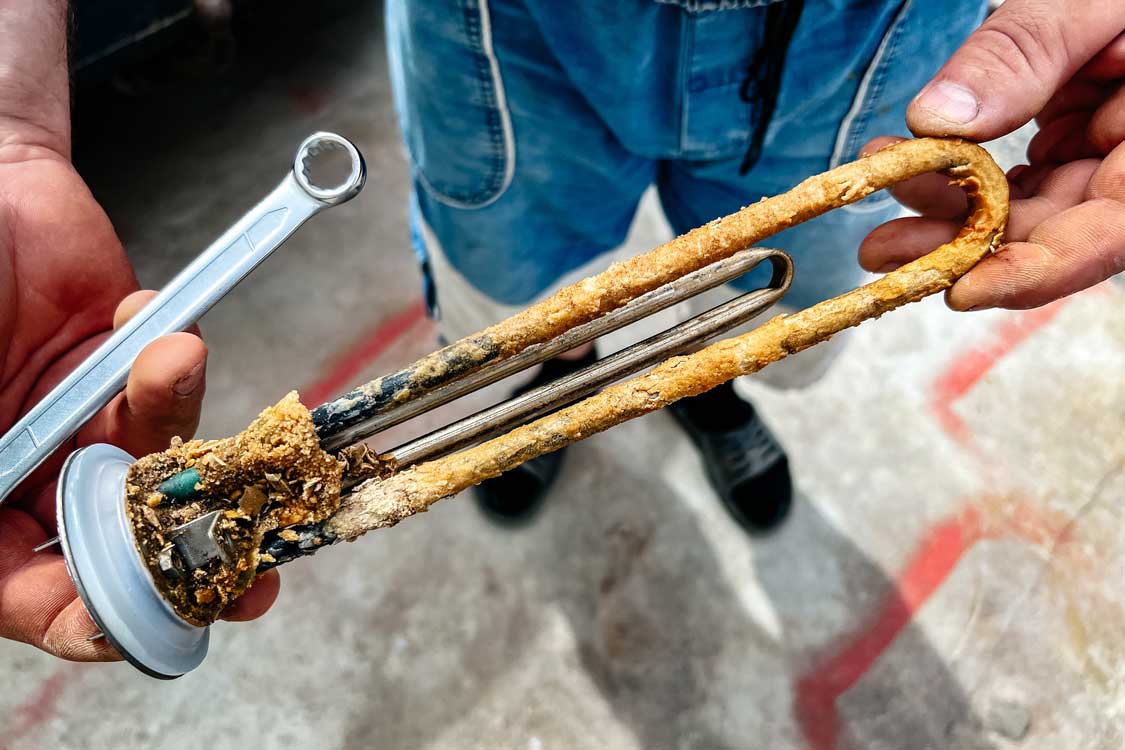
- Scale buildup: Central Texas hard water can insulate heating elements with mineral deposits, leading to hot water not getting hot and slow recovery.
If there’s still no hot water after these checks, you may be dealing with a failed element, defective thermostat, or wiring issue that needs professional testing.
Gas Tank Water Heaters
Gas models need consistent gas supply and dependable ignition. If your gas water heater has left you with no hot water in house:
- Gas supply: Confirm the shut-off valve to the water heater is open. If you smell gas, evacuate and call for help.
- Pilot light/ignition: Look through the viewing window. If the pilot is out, follow the manufacturer’s instructions on the unit to relight once. If it won’t stay lit, the thermocouple, flame sensor, or gas control may need service.
- Burner performance: If the burner cycles on and off rapidly or appears weak, sediment on the tank bottom can reduce heat transfer.
- Thermostat/dip tube: A failing control or cracked dip tube can blend cold water into the hot outlet and result in hot water not getting hot.
Persistent ignition problems, repeated pilot failures, or unreliable burner operation are clear signs to call a professional.
Tankless Water Heaters
Tankless systems are efficient but sensitive to flow and mineral scale. If your tankless water heater causes hot‑cold swings or no hot water:
- Temperature setting: Confirm the controller is set appropriately (typically 120°F). Settings that are too low can feel like no hot water.
- Flow rate: Open the hot tap fully. If flow is too low, the heater may not ignite. Clean inlet screens and faucet aerators if clogged.
- Error codes: Note any code on the display and check the manual. Repeated codes require professional diagnostics.
- Scale buildup: Central Texas hard water can coat the heat exchanger, causing temperature swings and shutdowns. Descaling restores performance.
- Recirculation settings: Misconfigured timers or controls can lead to long waits or inconsistent temperatures.
If you’re still seeing hot‑cold fluctuations or a water heater not heating after these checks, professional servicing can assess gas supply, venting, sensors, and the control board.
Common Causes Why Your Water Heater Is Not Heating
Knowing the likely culprits helps you choose your next step with confidence. Here are the most frequent reasons a water heater not working shows up in San Antonio homes.
Gas Tank Water Heaters
- Extinguished pilot or ignition failure (thermocouple or flame sensor issues)
- Gas supply interruptions or partially closed valves
- Sediment buildup reducing burner efficiency and heat transfer
- Faulty gas control valve or thermostat
- Damaged dip tube blending cold into the hot outlet
Electric Tank Water Heaters
- Tripped breaker or high‑limit reset
- Failed upper or lower heating element (recovery slows or stops)
- Defective thermostats not calling for heat
- Scale or sediment insulating elements
- Loose connections or wiring faults
Tankless Water Heaters
- Mineral scale in the heat exchanger causing lukewarm water or error codes
- Insufficient gas supply or venting faults triggering shutdowns
- Clogged inlet filters or a stuck mixing valve restricting flow
- Incorrect temperature or recirculation settings
- Sensor or control board failures
These issues show up as hot water not getting hot, no hot water in house, or unstable temperatures—often amplified by local water quality and installation conditions.
Texas-Size Factors That Increase Hot Water Complaints
Conditions across San Antonio and Austin can make a hot water heater not working more likely. Addressing these factors improves reliability and comfort.
- Hard water scale: Mineral‑rich water leaves deposits on electric elements and inside tank and tankless heat exchangers. Scale acts like insulation, forcing the system to work harder and leading to water heater not heating symptoms. Regular flushing and descaling protect efficiency.
- Attic installations: Many homes place water heaters in the attic. Long pipe runs delay hot water and increase heat loss in lines. Insulating pipes and using recirculation systems reduce wait times and combat hot water not getting hot at distant taps.
- Garage installs and cold snaps: Sudden winter drops can chill tanks and supply lines in garages, slowing recovery and lowering outlet temperatures. Pipe insulation and proper thermostat settings help maintain steady hot water.
- Ageing plumbing: Older mixing valves and narrow runs can create restrictions or blend too much cold, causing temperature swings and perceived no hot water.
- High household demand: Back‑to‑back showers, laundry, and dishwashing can exceed recovery rate. Proper sizing, recovery expectations, and recirculation design restore consistency.
These local realities do not always mean a failure, but they shape how fast hot water arrives and how well your system maintains temperature—especially at peak use.
Simple, Safe DIY Checks
Handle the basics with care, then let ouor trained technicians manage higher‑risk work. It’s the disciplined approach that protects your home.
What You Can Do
- Verify thermostat settings and confirm power or gas supply
- Reset an electric unit’s high‑limit switch once after shutting off power
- Relight a gas pilot once following the manufacturer’s on‑unit instructions
- Clean faucet aerators and check hot water at multiple fixtures
- Note tankless error codes and confirm temperature/recirculation settings
If any step feels uncertain, or the unit repeats the same failure after a reset, schedule service. Repeated breaker trips and high‑limit resets point to deeper problems that can leave you with a water heater not heating again.
When to Just Call Radiant
- Burning or electrical smells
- Active leaks from the tank or connections
- Repeated breaker trips or high-limit resets
- No hot water after checking power, gas, pilot, and thermostat settings
- Sudden scalding water or major temperature swings
- Persistent error codes on a tankless unit
These issues point to component failures—elements, thermostats, gas controls, sensors, venting, or mixing valves—that require trained diagnostics. The goal is clear: find the exact cause, fix it safely, and keep the water heater not heating problem from coming back.
That’s where Radiant comes in. If your water heater not working has disrupted your day—or you suddenly have no hot water in the house—our licensed technicians are ready with same-day and emergency service across San Antonio and Austin. We’re trained across gas, electric, and tankless systems and arrive prepared to diagnose and resolve the issue efficiently.
Homeowners Trust Radiant:
- Professional diagnostics: We pinpoint root causes—scale buildup, failed elements, ignition faults, venting issues, control failures—so repairs last.
- Clear, honest pricing: You’ll understand the plan and cost upfront. No surprises.
- Respect for your home: Clean work areas, tight arrival windows, and step-by-step updates.
- Preventive care: Flushing, descaling, and tune-ups to prevent future hot water not getting hot issues.
- Local expertise: We understand Central Texas challenges—hard water, attic installations, garage-mounted tanks, and sudden weather swings that make hot water heater not working problems more common here.
When precision matters, choose the team that gets it right the first time. Schedule online or call Radiant Plumbing & Air Conditioning today. We’ll repair your water heater and restore your hot water quickly, fix the underlying cause, and stand behind the work with integrity.