
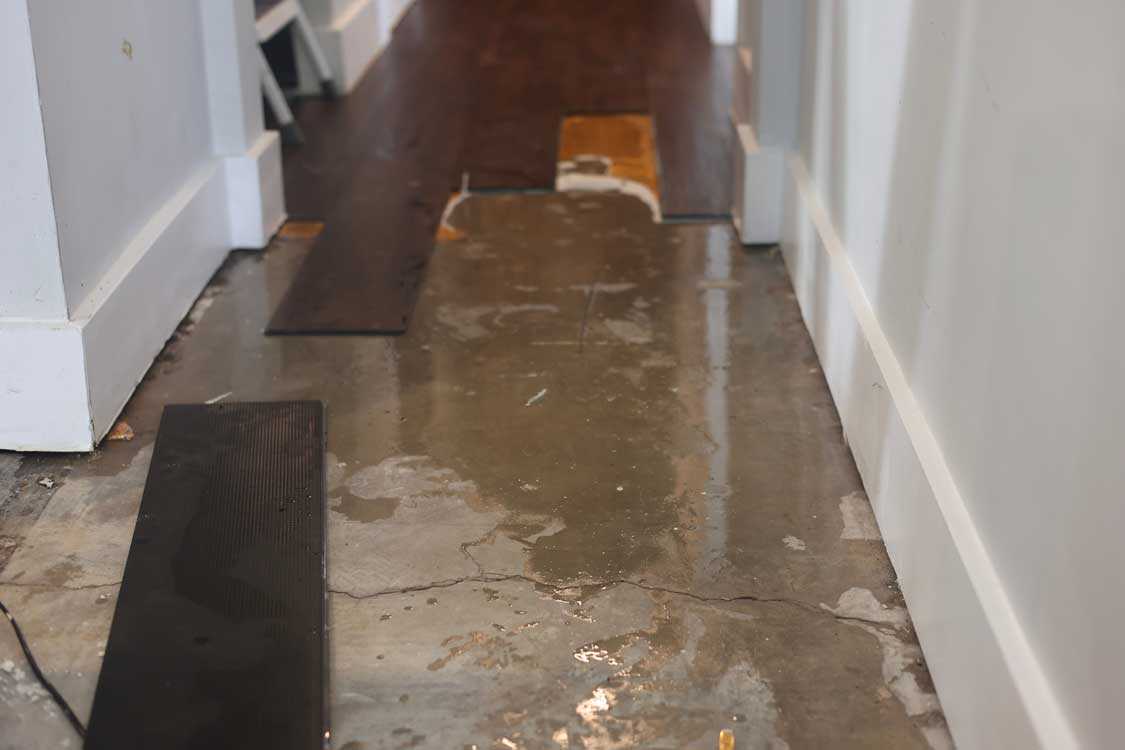
For Austin homeowners, that distinction matters. Many water leaks here stay hidden until damage is already underway. Moisture meters, used alongside water leak detectors and professional diagnostics, help catch problems earlier — without tearing into walls blindly.
At Radiant Plumbing & Air Conditioning, we use moisture meters every day as part of real leak investigations. This guide explains how they work, when they’re useful, and how they fit into a smart, proactive approach to protecting your home from water damage.
Why Small Leaks Hide in Plain Sight
Most serious plumbing leaks don’t announce themselves with dripping sounds or standing water. Instead, they show up slowly as:
- Damp drywall behind cabinets
- Subtle flooring changes
- Musty smells that come and go
- Higher-than-normal water bills
In Central Texas, slab foundations and concealed plumbing make visual detection even harder. By the time water becomes visible, it has often already spread.
That’s why early leak detection focuses on confirmation and verification, not guesswork.
What Is a Moisture Meter Used for in Leak Detection?
A moisture meter is used to measure the amount of moisture inside solid materials, such as drywall, wood framing, flooring, or concrete.
For leak detection, plumbers use moisture meters to:
- Confirm whether an area is actively wet
- Identify abnormal moisture patterns behind walls or floors
- Narrow down the likely source of a hidden leak
- Verify that moisture levels are dropping after a repair
In simple terms: A moisture meter helps confirm the presence and extent of water damage caused by a leak.
What a Moisture Meter Does Not Do
Moisture meters do not:
- Automatically locate the exact leak source
- Prevent leaks from happening
- Replace plumbing diagnostics
They are part of a toolset, not a standalone solution.
Professional Moisture Meters vs. Homeowner Devices
Homeowner moisture meters can be helpful for basic checks, especially after a known spill or visible leak. However, professional plumbers use higher-grade meters designed for:
- Greater accuracy
- Deeper material penetration
- Comparative readings across multiple surfaces
At Radiant, we use moisture meters alongside pressure testing, acoustic listening, and system knowledge to avoid unnecessary damage to your home.
Water Leak Detectors, Water Sensors, and Water Alarms Explained
These terms often overlap online, but they serve different purposes.
Water Leak Detectors
Water leak detectors are systems designed to detect leaks through water flow changes, sensors, or both. Some can trigger alerts or shut off water automatically.
Used for:
- Whole-home monitoring
- Ongoing leak protection
- Homes where damage risk is high
Limitations:
- Require proper setup and calibration
- Do not identify moisture already inside walls
Water Leak Sensors
Water leak sensors are placed near specific fixtures and trigger an alert when water touches them.
Used for:
- Under sinks
- Near water heaters
- Behind washing machines
Limitations:
- Only detect water where placed
- Cannot detect hidden leaks
Water Sensor Alarms / Water Alarms
Water alarms are basic devices that sound when water is detected.
Used for:
- Immediate, local alerts
- Simple protection in visible areas
Limitations:
- No remote alerts
- Limited coverage
Retail pages focus on features. Professionals focus on placement, coverage, and confirmation.
Where Moisture and Water Leak Detection Tools Work Best
Strategic placement makes the difference between early detection and missed damage.
Most effective locations include:
- Water heaters
- Sink cabinets
- Laundry rooms
- Mechanical rooms
- Secondary refrigerators with water lines
Slab Foundations: What to Know
Moisture meters and sensors cannot detect slab leaks directly. They help identify moisture once it migrates upward, but professional leak detection is required to confirm the source beneath concrete.
Do Smart Water Leak Detectors Improve Leak Detection?
Smart water leak detectors can improve outcomes when:
- The homeowner travels often
- The home sits vacant for periods of time
- Immediate remote alerts are needed
- Automatic shutoff adds peace of mind
Simpler water alarms may be enough when:
- Someone is usually home
- Risk areas are limited and visible
- The goal is early notification, not automation
Technology should support your lifestyle—not complicate it.
How Plumbers Use Moisture Meters in Real Leak Investigations
This is where professional expertise matters most.
At Radiant, moisture meters are used to:
- Map moisture spread before opening walls
- Compare wet and dry areas for accuracy
- Confirm leaks are fully resolved
- Track drying after repairs
Moisture meters provide evidence, not assumptions. They help protect your home from unnecessary damage while ensuring problems are actually fixed.
Why Proper Installation Matters More Than the Device Itself
Even advanced water leak detectors can fail if installed incorrectly.
Common problems include:
- Sensors placed too far from fittings
- False alarms caused by condensation
- Gaps in coverage near high-risk connections
Professional installation ensures devices are placed based on how water moves through your home, not generic instructions.
Radiant installs and supports a wide range of leak detection systems, always focusing on the right solution rather than a specific device.
When It’s Time to Bring in a Professional
Leak detection devices are helpful, but they can only tell you that water is present — not why it’s there or how serious the problem may be.
If you’re seeing repeated alerts, rising water bills, visible staining, or moisture with no clear source, that’s the moment to stop guessing and get a professional involved.
At Radiant Plumbing & Air Conditioning, we help Austin homeowners move from alerts to answers. Our plumbers use moisture meters, leak detection tools, and hands-on diagnostics to confirm what’s happening behind the walls, pinpoint the source, and make sure the issue is fully resolved—not just quieted down.
We can help with:
- Professional leak detection for hidden or ongoing moisture
- Moisture verification to confirm whether damage is active or drying
- Water leak detector and sensor installation, placed where they actually work
- Clear explanations, honest guidance, and practical next steps
Our goal isn’t to sell you a device. It’s to give you clarity, protect your home, and help you take action before a small leak turns into a bigger problem.
Because when it comes to water damage, early answers matter — and having a trusted expert makes all the difference.